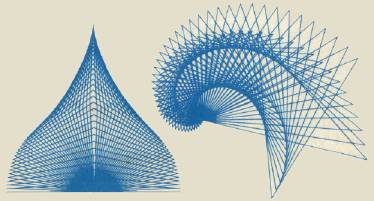
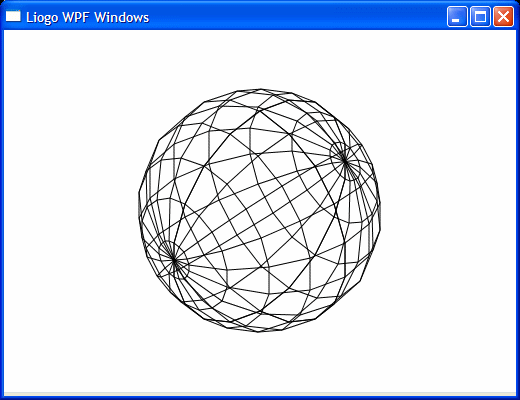
Turtle graphics was first developed in 1967 as a way to teach children basic computer programming. A curser (called a turtle) can controlled and moved around the screen by inputting simple commands. As the curser moves around the screen it draws a line. These are the comments:

And here is one example on how to draw turtle graphics:
 |
| HOW TO MAKE IT:
PENDOWN
FORWARD 60
RIGHT 90
FORWARD 60
RIGHT 90
FORWARD 30
RIGHT 90
FORWARD 30
LEFT 90
FORWARD 30
RIGHT 90
FORWARD 30
|
Sensors
1. Light
The Light Sensor is a passive devices that convert this “light energy” whether visible or in the infra-red parts of the spectrum into an electrical signal output. Light sensors are more commonly known as “Photoelectric Devices” or “Photo Sensors” because the convert light energy (photons) into electricity (electrons). Usually light sensors is controlled by the users in settings. Here is a picture of a light sensor:
2. Washing machines
Sensors in washing machines include Temperature Sensor, Water Level Sensor, Dirt Sensor, Pin out of balance Detector, Leak Detector, Mains Failure Sensor. These sensors helps you to know if there is any problem in the washing machine and it makes you easier to wash your clothes without worrying what might happen.

Control examples:
Greenhouse control systems:
-Light: When the light in the greenhouse environment is too dark, the light sensors will give a signal to us.
-Heating: The hot water or steam is then transported throughout the greenhouse in pipes. The pipes can end in a heat exchanger where a fan distributes heated air. The pipes can run along the floor and also be used as cart rails between aisles. Heat will then rise upward through the crop by convection.
-Cooling: Water cooled pads at the top part of tall towers cool the surrounding air. The cooled air then drops displacing warmer air below.
-Relative humidity: Relative humidity can be increased by running the cooling pads or by fogging. Relative humidity can be decreased by running the heaters or simply venting.

Robotics
Nowadays, robots are used to replaced human works. However, robots can never be the same as human. Robots also have some advantages and disadvantages. Here are some advantages and disadvantages of using robots to replaced human works:
Advantages:
-Decreased overhead costs
-Increased productivity
-Consistency, Reliability, and Accuracy
-High volume production
-Increase in safety
Disadvantages:
-Expensive
-Cannot respond in times of danger
-Overly dependant upon robot technology
Thank you for reading
Credits to:
http://www.ictlounge.com/html/control_applications_turtle_graphics.htm
http://www.electronics-tutorials.ws/io/io_4.html
https://prezi.com/ieqcgm5dde-f/sensors-used-in-washing-machine-and-their-functioning/
http://ag.arizona.edu/ceac/sites/ag.arizona.edu.ceac/files/pls217nbCH13_2.pdf

No comments:
Post a Comment